“The water bill went up. The light bill went up. Now property taxes — what exactly are we doing here?”
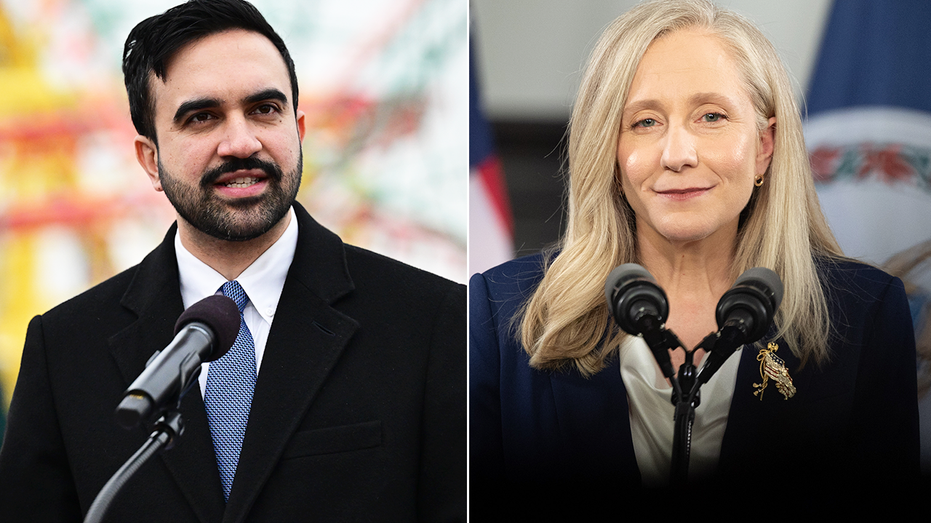
This was one of many cries of worry and frustration voiced by New York City residents at a recent public meeting, where they said that Mayor Zohran Mamdani’s policies since taking office have made life more expensive. The backlash is significant as Mamdani, like many Democrats who swept into office in November, campaigned explicitly on making life more affordable for constituents.
It’s not just in New York. Like Mamdani, Democratic Virginia Gov. Abigail Spanberger campaigned as a vocal critic of Republican economic policies. Now, she is facing voter outrage as costs in the Old Dominion continue to rise, and an economic climate that is increasingly seen as hostile to businesses drives away some of the biggest contributors to the tax base.
The trend underscores mounting political risk for Democrats, who will now need to demonstrate that they’re keeping their promises ahead of the midterms.
In New York City — the world’s financial capital and home to nearly 9 million — rising costs have national consequences.
Residents say Mamdani is backtracking on campaign promises to lower housing costs, pointing to a proposed property tax hike, rising water bills and higher electricity costs as signs that life is only getting more expensive.
With the city’s housing market already under strain, where demand far exceeds available supply, critics say Mamdani’s proposed rent freeze could discourage new construction, tighten inventory and push prices higher over time.
MAMDANI BUDGET POURS MILLIONS INTO DEI OFFICES AND CUTS 5,000 NYPD JOBS
“Economists — whether they are on the right or on the left — essentially are in universal agreement that when the government implements price controls in the rental market, you end up with housing shortages,” said E.J. Antoni, chief economist at the Heritage Foundation.
Antoni argued the city’s affordability challenges are largely policy-driven. “If we look at the ways in which New York City is more expensive than other places around the country, it is chiefly due to bad public policy that has imposed those costs,” he said, adding that “doubling down on those government failures will only make it worse.”
Edward Pinto, a senior fellow and co-director of the AEI Housing Center at the American Enterprise Institute, said Mamdani’s proposal to freeze rents and increase property taxes in New York would be a “one-two wealth destruction punch.”
MAMDANI’S ESTATE TAX PLAN COULD DRIVE WEALTH OUT OF STATE, CRITICS WARN
“The rent freeze would drive multifamily property values down and the increase in property taxes would drive both multifamily and single-family values down. At the same time, the construction of new supply would contract and property upkeep would diminish as repairs are deferred and improvements are not made,” Pinto said.
For tenants and homeowners, those shifts could translate into fewer housing options and higher long-term costs.
When asked about Mamdani’s latest proposal — an estate tax plan that could pull middle-class families into a levy long aimed at the wealthy — Pinto warned it would deal a new blow to the city.
“This proposal would destroy NYC’s wealth in a different manner,” Pinto said. “This estate tax proposal will mistreat capital and result in the voluntary exodus of NYC residents and their wealth to places like Florida and Tennessee,” he added.
Despite the fact that Spanberger campaigned on affordability in Virginia, lawmakers from her party in Richmond are advancing a sweeping set of tax proposals that will raise costs for residents and businesses.
They propose more than 50 taxes targeting income, investment and everyday economic activity, from joining a gym to bringing pets to the groomers.
“This is part of a broader picture we’re seeing across blue states,” said Jack Salmon, a research fellow at the Mercatus Center at George Mason University focusing on tax and fiscal policy. “These states seem particularly determined to raise the tax burden on their highest-earning taxpayers.”
At the center are changes to Virginia’s tax structure. One bill would raise top income tax rates to as high as 10%, while another would impose a 3.8% tax on investment income.
CONSERVATIVE STATES SEE LOWER INFLATION THAN LIBERAL ONES NATIONWIDE, WHITE HOUSE DATA SHOWS
For some high earners, those levies could stack — pushing rates to 13.8% and moving Virginia closer to high-tax states.
Lawmakers are also considering a range of new taxes and fees across the economy, from higher sales taxes and levies on deliveries and rideshare services to taxes on everyday services like repairs, gym memberships, dry cleaning and dog grooming, along with new taxes on large employers.
Adding to the strain are rising energy costs. A Dominion Energy rate hike that took effect Jan. 1 reflects, in part, the costs of transitioning to offshore wind under the Virginia Clean Economy Act (VCEA) — a policy that could result in higher utility bills for customers.
Spanberger has also moved to rejoin the Regional Greenhouse Gas Initiative (RGGI), a carbon pricing program her predecessor, Republican Gov. Glenn Youngkin, exited — a move critics warn will increase the burden on household energy bills.
The mounting costs are already drawing concern from business leaders. Aerospace giant Boeing plans to move its headquarters from Virginia to Missouri, a shift expected to hit the state’s tax base and business climate.
Even if the immediate fiscal impact is limited, the loss of high-paying headquarters jobs and the spending they support is expected to erode tax revenues and create ripple effects across the local economy, from reduced consumer spending to weaker demand for services.
With costs rising and frustration mounting, voters will soon decide whether those promises still hold — or whether change is coming in November.
Mamdani and Spanberger’s office did not respond to Fox News Digital’s requests for comment.
[#item_full_content]