Virginia’s redistricting fight is racing toward the state’s highest court after a county judge blocked certification of a narrowly approved ballot measure on Wednesday that would dramatically reshape the state’s congressional map in favor of Democrats and potentially impact control of Congress.
Longtime Del. Terry Kilgore, the Republican leader of the Virginia House, told Fox News Digital state Democrats unlawfully forced through the mid-decade redraw to give themselves a 10-1 advantage, saying he was “irritated” by what he viewed as unprecedented partisanship.
“This is Virginia. We normally get along, normally go through things the right way,” Kilgore said. “I’ve been here over 30 years. … I’ve never seen anything like this so partisan since I’ve been here, and it was a very sad day for the Commonwealth.”
He noted the pressure the state Supreme Court, which leans slightly conservative, is now under to address the polarizing election issue, saying he believed it would be struck down.
“I think if they follow the law, they will definitely strike this down and have it null and void, so we’re optimistic,” Kilgore said.
More than three million Virginians turned out to vote on the high-profile, multimillion-dollar redistricting effort, approving it on April 21 by a slim margin of 51.5% to 48.5%, which Kilgore said was representative of Virginia’s purple, rather than blue, political landscape.
“They thought we were going to lose by 15 points, and that would make their argument that Virginia is a 10-1 state,” Kilgore said. “Of course it was like at 2% and that shows you how close Virginia really is, that we are a 6-5 state, and we actually won some of the districts that they have redrawn. This is just a power grab. That’s all you can say, a power grab by the national Democrats.”
OBAMA ENDORSES VIRGINIA REDISTRICTING CONSTITUTIONAL AMENDMENT THAT COULD HELP DEMS GAIN 4 SEATS
Wednesday’s decision by Tazewell County Circuit Court Judge Jack Hurley to block certification of the results stemmed from Republican National Committee v. Koski, one of multiple lawsuits challenging the redistricting referendum as unconstitutional and unlawful.
The question that appeared on the ballot on April 21 asked voters if they wanted to approve a new congressional map that would “restore fairness” in elections.
The question was reflective of comments by Virginia House of Delegates Democratic leader Don Scott, who said in February the amendment was “about leveling the playing field across the country. Republicans are gerrymandering maps to override the will of the voters,” Scott said, noting Texas, North Carolina and Missouri, while leaving out Democrat-friendly mid-cycle redistricting in California and Utah. Scott claimed a “10-1 map levels the playing field.”
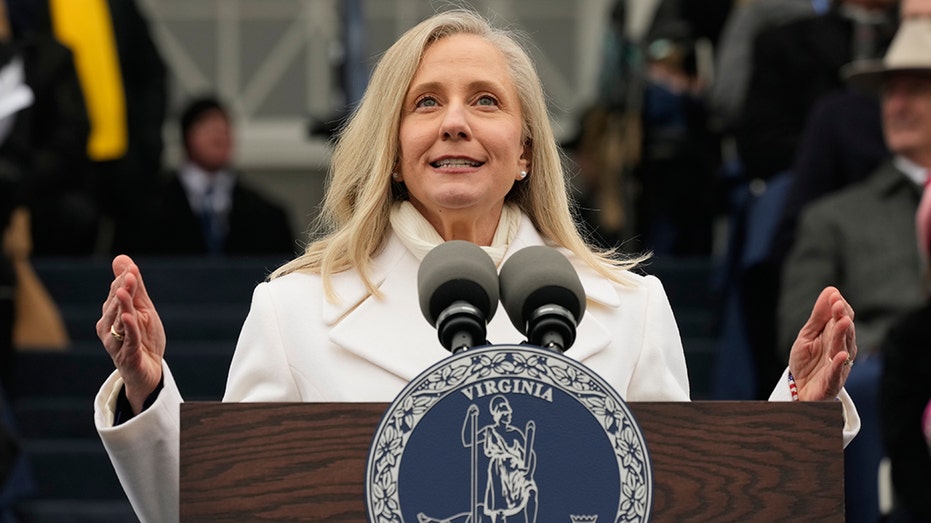
Newly elected Democratic Gov. Abigail Spanberger previously vowed to leave Virginia’s maps to the redistricting commission but has faced “bait-and-switch” accusations for reversing that stance and signing the amendment, saying it was a temporary response to President Donald Trump’s insertion into redistricting fights.
Hurley in his decision cited procedural failures in how the legislature advanced the amendment and “misleading” ballot language that he said improperly influenced voters. Attorney General Jay Jones, an elected Democrat, said an appeal was imminent.
DAVID MARCUS: RICH MEN NORTH OF RICHMOND SET TO STEAL THE VOTES OF RURAL VIRGI
“Virginia voters have spoken, and an activist judge should not have veto power over the People’s vote. We look forward to defending the outcome of last night’s election in court,” Jones said Wednesday.
The Tazewell decision came after the same judge, Hurley, had previously ruled against Democrats in another, similar lawsuit brought by Republican state lawmakers over the amendment.
Hurley initially blocked the referendum vote from even moving forward as part of that case, but the Virginia Supreme Court stepped in and stayed that decision in March.
MARYLAND HOUSE APPROVES NEW CONGRESSIONAL MAP AS SENATE LEADERS WARN OF RISKS
“It is the process, not the outcome, of this effort that we may ultimately have to address,” the state’s highest court found at the time. “Issuing an injunction to keep Virginians from the polls is not the proper way to make this decision.”
The Virginia Supreme Court is set to hear oral arguments in that case on Monday, during which the high court could also address issues raised in the other lawsuits still proceeding through the lower courts.
Jason Snead, executive director of the Honest Elections Project, which filed an amicus brief arguing that Democrats violated the state Constitution by extending a special session to pass the amendment, said his group’s arguments were among several that would ultimately be decided by the Supreme Court. He said the various lawsuits may also be consolidated since they contain overlapping arguments.
DAVID MARCUS: VIRGINIA’S BATTLE OVER GERRYMANDERING BETRAYS OUR BROKEN POLITICS
“[The Virginia Supreme Court] has really been backed into a corner by this, and I think that they understand that they’re going to have to get an answer here very quickly, and I think that’s why they set oral argument in this case so soon after the referendum,” Snead said.
He added that “I think we’re going to get a ruling as soon as May.” The deadline for candidates to qualify for the ballot is May 26.
Snead said that in addition to an allegedly unconstitutionally extended special session, other concerns laid out by Republicans included that ballot language should have, by law, been posted for 90 days and that Democrats “simply tried to get out of jail with that one” by retroactively repealing the law. He noted the “lack of neutrality” in the ballot language itself, referencing how it framed redistricting as “restoring fairness.”
Although the case could even make its way to the U.S. Supreme Court, Snead predicted that the fight would end in Virginia.
“They’re raising questions about legislative process and constitutional procedure at the state level, so I really think this is going to probably end with the Virginia Supreme Court,” Snead said.
Fox News Digital reached out to Jones’ and Spanberger’s offices for comment.
[#item_full_content]