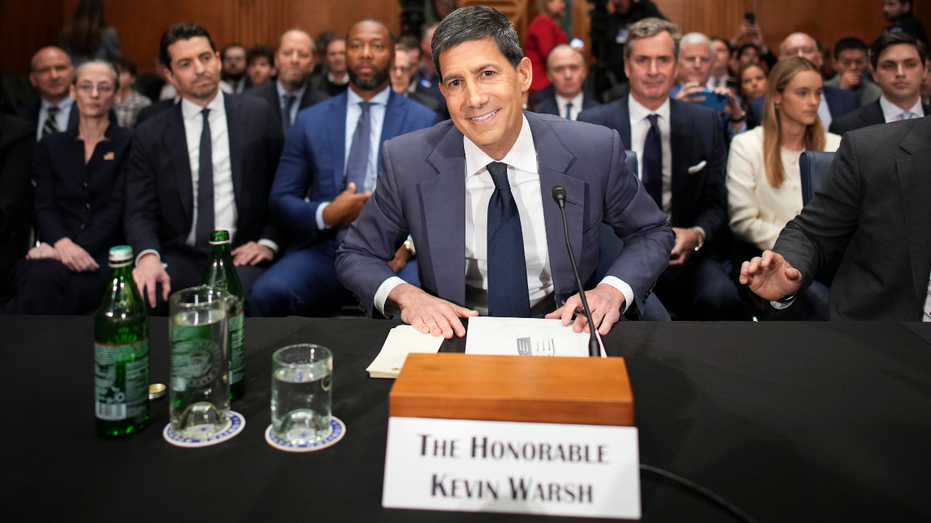
The Senate cleared Kevin Warsh on Wednesday to lead the Federal Reserve, ushering in a new era at the central bank under President Donald Trump’s nominee.
The Senate confirmed Warsh, 54–45, concluding a monthslong search that began last summer for a successor to Federal Reserve Chair Jerome Powell as his term neared its end. The vote was largely along party lines, with only Pennsylvania Democrat Sen. John Fetterman crossing over in support.
Earlier in the week, Warsh was confirmed to the Fed’s Board of Governors, a 14-year appointment and a required step before serving as chair. He previously served on the board as its youngest member at age 35 and now returns to lead the central bank at a pivotal moment.
Though the Federal Reserve operates largely out of public view, its decisions shape borrowing costs, job growth and interest rates for millions of Americans, making Warsh’s confirmation a pivotal moment for how that influence will be wielded.
Warsh, a lawyer and financier, steps into the role at a particularly volatile time.
FROM MORTGAGES TO CAR LOANS: HOW AFFORDABILITY RISES AND FALLS WITH THE FED
The central bank is grappling with persistent inflation, the economic fallout from the war in Iran, and a looming Supreme Court decision involving Fed Governor Lisa Cook, all while political pressure builds ahead of the midterm elections in November.
The 56-year-old multimillionaire has already signaled a clear break from the central bank’s current approach.
In testimony before lawmakers on April 21, Warsh pledged to keep monetary policy “strictly independent” and said he intended to keep the central bank “in its lane,” warning that the Fed had become too involved in social policy.
He has also taken aim at what he sees as a complacent central bank, warning that large institutions are prone to inertia and that clinging to the “status quo” in a fast-moving economy is not just outdated, but dangerous.
WATCH: SEN. WARREN UNLOADS ON TRUMP’S FED NOMINEE KEVIN WARSH IN EXPLOSIVE HEARING SHOWDOWN
At the same time, he has signaled openness to closer coordination with elected leaders and to work with the White House and Congress on non-monetary matters — an approach that could reshape how the Fed operates in Washington.
How that balance is struck could define not only Warsh’s tenure, but the future direction of the institution that plays a major role in the financial lives of millions of Americans.
Warsh will take the reins from Powell, whose eight-year tenure as Fed chair concludes Friday. Powell, widely considered the most crisis-tested Fed chair, is not leaving the central bank entirely.
Powell’s term on the Fed board runs through 2028, and he has indicated he plans to remain in place until all investigations into a renovation project at the Fed’s headquarters are complete.
POWELL WILL REMAIN AT THE FED FOR NOW, SETTING UP POTENTIAL CLASH WITH TRUMP
If Powell stepped aside entirely, it would have opened a seat for Trump to fill, giving him another opportunity to shape the Fed’s leadership. By staying on, Powell retains influence over U.S. monetary policy, potentially intensifying tensions with the president.
“I plan to keep a low profile as a governor. There is only ever one chair of the Federal Reserve Board. When Kevin Warsh is confirmed and sworn in, he will be that chair,” Powell told reporters at a news conference at the Federal Reserve on April 29.
Powell said that decision ultimately depends on the outcome of the investigation.
“I will not leave the board until this investigation is fully resolved with transparency and finality,” Powell said. “I’m encouraged by recent developments, and I am watching the remaining steps in this process carefully. My decisions on these matters will continue to be guided entirely by what I believe is in the best interest of the institution and the people we serve.”
Powell’s tenure at the central bank dates back to 2017, when he was selected by Trump to succeed Janet Yellen. He was reappointed to a second four-year term by President Joe Biden in 2022, which expires on May 15.
The White House and Federal Reserve did not immediately respond to Fox News Digital’s request for comment.
[#item_full_content]