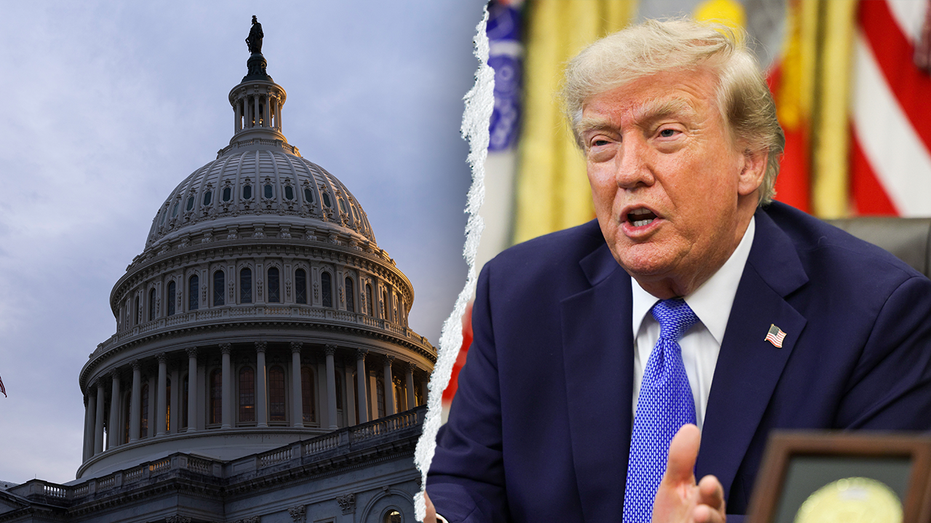
President Donald Trump’s private advisors and attorneys are now protected by executive privilege as long as their conversations relate to the president’s official decision-making, according to a memo Tuesday from the Justice Department’s Office of Legal Counsel.
“The need for presidential confidentiality applies to communications with private advisers just as it does with government officials,” the 21-page memo stated.
The memo, written by Assistant Attorney General Elliot Gaiser, comes months ahead of the midterm elections as Democrats battle for control of Congress.
Democrats have pledged to continue their investigations into Trump and his family’s business dealings and financial investments, potentially using subpoenas and congressional hearings to advance those probes.
TRUMP AG PICK TODD BLANCHE FACES SENATE TEST IN FIRST MAJOR CONFIRMATION FIGHT SINCE GRAHAM’S DEATH
Under the Office of Legal Counsel’s new nonbinding memo, private citizens who have offered advice in confidential conversations with Trump or White House staffers about official presidential duties can claim executive privilege if they’re subpoenaed by Congress.
“The presidential communications privilege is rooted in the need for confidentiality to ensure that [this] presidential decision-making is of the highest caliber, informed by honest advice and full knowledge,” the memo stated. “Without a promise of confidentiality, the President’s ability to ‘decide and act quickly’ on matters of unrivaled importance would be seriously hindered.”
The memo noted that the president may sometimes need expertise and guidance from an outside source who could be crucial to making the best decision. Gaiser also acknowledged that a private advisor to the president may be more hesitant to offer guidance because of concerns that doing so could negatively affect the advisor’s livelihood.
“Such individuals may be reluctant to provide advice on controversial or unpopular policies based on a fear of public disclosure or potential ramifications for their personal endeavors,” the memo stated.
Gaiser pointed to a long history of presidents seeking advice from people outside the federal government. Andrew Jackson had his informal “Kitchen Cabinet,” while Franklin D. Roosevelt turned to a group of academics known as his “Brain Trust.” The memo also noted that Grover Cleveland consulted financier J.P. Morgan during a Treasury gold shortage, and Lyndon B. Johnson sought advice from trusted friends outside the government during the Vietnam War.
“Yet throughout history, Presidents have relied on private advisers (or, at minimum, advisers outside the Executive Branch) to perform their executive function,” Gaiser wrote.
Senate Minority Leader Chuck Schumer, D-N.Y., interpreted the Justice Department memo as a sign that Trump is worried about what could come if Democrats win control of Congress.
SIGN UP TO GET THE POLITICS NEWSLETTER
“Donald Trump is scared,” Schumer wrote on X. “He knows accountability is coming. He’s using his newly installed Attorney General/personal lawyer, Todd Blanche, to cover up his communications with private advisers and special interest cronies.
“These are the actions of someone with something to hide,” Schumer continued. “And it shows he is petrified of the questions a Democratic Congress will demand answers to. We will not let Trump escape the accountability he deserves.”
[#item_full_content]