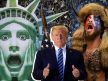
On January 6, 2021, the United States of America experienced an attempted coup d’?tat. It wasn’t anything like a Third World coup with tanks, but effectively that’s what it was.
On that day a year ago, the U.S. came very close to devolving from a stable democracy to an authoritarian presidency when an incited crowd, encouraged to be there, tried to upend democratic election results.
There are no mild, elegant, soothing or ameliorating terms to describe it, except to call it what it was: an unsuccessful coup that brought American democracy to the brink.
January 6 was an inflection point in America’s historical trajectory. It did not merely expose how the country is divided into two hostile Americas that do not really communicate with each other. It also violently expressed how broken the American political system is.
It was an insurrection, inspired by an incumbent president, supported by dozens of Republican members of Congress. And it could have worked, as David Rothkopf describes in his USA Today article “What if the insurrection succeeded?” He concluded that the real consequence was that the failure set in motion a movement within the Republican Party that may precipitate a successful coup next time, in 2024.
‘I hope we won’t need it’: Israel’s doomsday option against Iran. LISTEN
And in an editorial last Saturday, The New York Times called it “a deadly riot at the seat of American government, incited by a defeated president amid a last-ditch effort to thwart the transfer of power.”
Hours after the attack, 147 Republican lawmakers still voted against certifying the election results. There was zero evidence, proof or testimonies of wrongful outcomes in the four states where Donald Trump – who lost the popular vote by some 7 million votes – claimed he had won. Sixty-three lawsuits were thrown out by courts throughout five states. That didn’t stop the evolution of “the Big Lie” about a stolen election.
Why Jewish Republicans will never call January 6 an insurrection
Can he rebuild America? Joe Biden, 2021 person of the year
Is 2021 America in any position to pontificate to other countries on democracy?
A short history of ‘F**k him’: How Netanyahu enraged U.S. presidents, from Clinton to Trump
That Trump propagates this in his inarticulate mumblings is understandable. He’s just being on-brand. That the Republican Party, the party of Reagan, Bush, Rockefeller, McCain, subscribed to this ludicrous conspiracy and bundle of invented lies tells you something about the state of American politics.
“The edifice of American exceptionalism has always wobbled on a shoddy foundation of self-delusion,” David Remnick wrote in The New Yorker this week. “For the first time in 200 years, we are suspended between democracy and autocracy.”
Just take a look at recent polls and surveys. A University of Massachusetts Amherst poll showed that 71 percent of Republicans don’t believe Joe Biden was rightfully elected as president. Eighty percent of Republican voters called the January 6 attacks “a protest.”
President Joe Biden and Chuck Schumer walking past a statue of Abraham Lincoln in the Capitol, Washington, earlier today.Susan Walsh/AP
A Washington Post/University of Maryland poll, meanwhile, indicated that 34 percent of Americans believe violent action against the government is at times justified.
Both an ABC network poll and a YouGov poll clearly show that a majority of Americans condemn the violence and partially blame Trump. However, the numbers among Republicans in various polls supporting the “Election was stolen” lie is staggering. ABC, like the UMass. poll, had it at 71 percent.
“We had 100 congressmen committed to it,” writes Trump adviser Peter Navarro in his recently published memoir. “It was a perfect plan,” he adds, in what is bound to constitute incriminating testimony for the Select Committee to Investigate the January 6th Attack on the United States Capitol.
Remnick quotes from a new book, “How Civil Wars Start: And How to Stop Them,” by Barbara F. Walter, a political scientist at the University of California San Diego. She describes an America divided between a coastal, urban, diverse and multicultural half and a white, rural, angry, “We are losing our America” antidemocratic half. When Obama was elected in 2008, Walter writes, there were an estimated 43 militia groups; by 2011, there were over 300. By the time Trump lost the 2020 election, they were ready to act – and not without encouragement.
January 6 was a sobering moment that highlighted how tenuous American democracy is. It wiped out the “baseball, hot dogs, apple pie and Chevrolet” myth. That’s a relic from the 1950s, preserved as a convenient narrative. January 6 unraveled all comfort zones. America has an inherently and structurally distorted political system, where the minority enjoys oversized power.
But the real chasm is cultural, with each half of America claiming theirs as the “real” America. A division between what U.S. political analyst Ronald Brownstein terms a “transformative” Democratic electoral coalition and a “restorative” Republican coalition.
On January 6, those two coalitions had their pre-Gettysburg moment.
A pro-Trump supporter participating in the “Stop the Steal” rally in Washington on January 6 last year. John Minchillo/AP
Global impact
January 6 did not stop at America’s shores. Some 7.5 billion inhabitants of planet Earth watched the Capitol Hill riot and insurrection attempt with horror and disbelief. They saw a mob, inspired by the president of the United States, trying to prevent the certification of election results and to reverse them. These were indelible images that not even a pandemic could mitigate, or diminish their impact and long-term repercussions.
January 6 was not just a fault line in American history but a watershed event in how the world perceives America. The insurrection, however clumsy, disorganized and unsuccessful as it was, turned the U.S. into a fragile democracy. As far as the world is concerned, the U.S. is no longer the “Shining City on a Hill.” It is not a model democracy to emulate. Arguably, America never was in some corners of the world, and in others it ceased to be a political and moral beacon the day Trump entered the White House in January 2017.
Harsh criticism and frustration with the U.S. is not new. Ever since America emerged out of World War II as the dominant, hegemonic superpower, arguably the strongest country in international relations in all relevant categories, the world was ambivalent about its demeanor and entertained contrasting views of it.
On the one hand, it was perceived as having a patronizing, bullying foreign policy; trigger-happy in military interventions; dismissive of the indigenous differences and nuances of other countries; willfully and callously ignorant of their unique political and cultural characteristics and norms. The U.S. was faulted for its pretentiousness in exporting democracy, regime-change policies and incessant pontificating about the supremacy of “the American way.”
But there was another dimension, another grand concept, of America. It was a force for good. An indispensable nation. A reluctant empire that never sought territorial expansion outside the continental U.S. Its rise marked the end of European colonialism. Its enormous power and political commitment deterred the Soviet Union. American democracy, American values, American culture and American consumerism were the model. The post-1945 world was a “Pax Americana” world. A democratic-liberal political and economic order, predicated on institutions and processes that the U.S. essentially built, with Washington being the ultimate agenda-setter and arbiter of regional disputes.
The world admired America’s stable democracy with its effective checks-and-balances system installed back in 1789, the consistent and peaceful transfer of power between presidents and, most importantly, the “New World” concept of the Constitution being the supreme sovereign.
Then came the 2020 election.
America’s grandstanding and pontificating lectures on democracy ring hollow now. The Biden administration’s sincere and serious efforts to revert to the pre-Trump status quo ante, to restore trust, reinforce alliances and pledge allegiance to international commitments are met with skepticism. Domestically, America is still dysfunctional and broken as the world sees it. The world saw America under the chaos and kakistocracy that was Trump. The world noticed how fragmented and divided America still is, despite the 2020 election result.
“What if Trump returns in 2024?” or “What if a smarter, more savvy, smarter and politically genial authoritarian figure capitalizes on America’s anxieties and divides, and wins the presidency?” These are two questions you will hear in Tokyo, Seoul, Paris, Kyiv or Jerusalem.
International affairs and history are not divided according to U.S. election cycles, but the events of January 6, 2021, and their aftermath, may have major implications on global stability. This is neither an exaggeration nor a prediction, but does anyone in their right mind seriously think you can detach the Iran nuclear talks, the Russia-Ukraine crisis or a future China-Taiwan-U.S. crisis from domestic events in the U.S.? Can President Biden craft and implement a foreign policy given the level of hyperpartisanship and toxicity in Congress? These are not rhetorical, academic questions. These are considerations being made in Beijing, Moscow, Tehran and elsewhere.
Even if the U.S. cannot be structurally or qualitatively substituted in the international system, its go-to superpower status has been eroded. This will affect allies in East Asia, Europe and the Middle East. The countries that will be most weakened as an extension of America’s weakening are those whose national security, power, perception of power, deterrence power, and diplomatic and military umbrella are all inextricably tied to America’s power.
The list is not long, but one country tops it: Israel.
The Capitol Building in Washington yesterday. TOM BRENNER/REUTERS
While a dose of alarmism is warranted, there is no reason to surrender to paralyzing fatalism. With all its political flaws, America is not yet an “anocracy” – that semi-democratic hybrid of democracy and autocracy. Nor is America an Eastern European illiberal democracy.
Most importantly, with all due respect to the prophets of doom and gloom, and barring a successful coup in 2024, America is not yet descending into fascism or Putin- or Erdogan-esque authoritarianism.
January 6 was an inflection point, a crude manifestation and ugly embodiment of America’s socio-cultural-political chasms and ills. It was a Polaroid moment where America got a real look at its less-than-pretty self.
The U.S., as Barbara Walter writes, “has entered a very dangerous territory” when you examine and assess the conditions that make civil war likely. This particularly pertains to the dysfunction of an increasingly unrepresentative political system, to anti-majoritarianism attitudes and practices, and to the self-professed “legitimate” assault on the rule of law.
Ultimately, on January 6, 2021, America’s guardrails stood and did not crumble. America’s checks and balances were heavily strained, but they did not falter. America’s gatekeepers, though alas not all of them, showed up for work at the critical moment.
American politics is at a point where a series of constitutional crises seem inevitable. America also suffers from endemic, self-inflicted ills: gun violence; racism; ignorance. But at its core, America still possesses the qualities that made it great.
America is changing positively. It has a democratic, diverse, multicultural, multiethnic majority. The political structure prevents this majority from asserting itself proportionately in elections, but a majority is a majority.
The disgruntled, hateful, racist, sometimes violent white supremacists who feel they are “the real America,” and therefore own it, are fighting a rearguard battle.
It is ugly and quite possibly will get even more odious and violent – but eventually they will lose. They already did in 2020.