It is said that in politics, the best idea is a stolen one.
Republicans are no dummies. They’re looking at what worked for Democrats last year as New York City Mayor Zohran Mamdani upset the primary field and rode easily to Gracie Mansion. They saw victories by New Jersey Gov. Mikie Sherrill and Virginia Gov. Abigail Spanberger.
They all ran on affordability. That issue carried them to victory.
HEALTHCARE, ECONOMY AND THE ‘ONE BIG BEAUTIFUL BILL’: WELCOME TO THE MIDTERMS
House conservatives are hungry for a legislative victory in the 2026 midterms. So, they’re focusing on bringing down the costs of housing and healthcare.
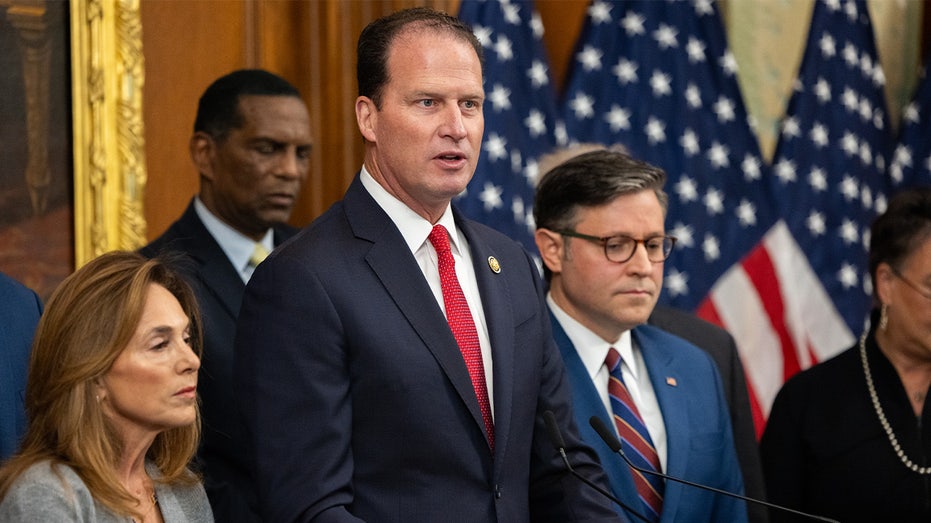
The Republican Study Committee (RSC), the largest bloc of conservatives in the House, released its blueprint recently.
“Here is the framework for what we’re calling the Make the American Dream Affordable Again,” boasted RSC Chairman Rep. August Pfluger, R-Texas. “The reconciliation 2.0 plan.”
There’s that word again: reconciliation.
It’s a parliamentary term. Specifically, “budget reconciliation.” It doesn’t mean a great deal in the House — although the House must adopt a budgetary package. But budget reconciliation shouts from the mountaintops in the Senate. The Senate is where most legislation needs 60 votes to break a filibuster. But if a bill is budget-neutral and deals with numbers – not policy — it qualifies for the budget reconciliation process.
That’s where the political magic comes in.
Budget reconciliation measures are not subject to a filibuster. You only need a simple majority. Republicans used the budget reconciliation gambit to approve the One Big Beautiful Bill Act last year. Otherwise, Senate Republicans were stymied in their efforts. They only have 53 votes in the Senate. So the GOP made the decision to go it alone. And they may do so again this year.
“I think we’d be derelict in our duties if we didn’t try something with reconciliation, considering how difficult it is to get something done in a bipartisan way around here,” said Sen. Kevin Cramer, R-N.D. “Maybe there’s something that we can do with reconciliation. I think we ought to try it.”
SCOOP: HOUSE FREEDOM CAUCUS LAYS OUT GOP BATTLE PLAN AHEAD OF REPUBLICANS’ HUDDLE WITH TRUMP
Rep. Eric Burlison, R-Mo., suggested that if the GOP didn’t try, they were squandering their majorities on Capitol Hill.
“The American people are not expecting a base hit. They need a home run. In short, this conference needs to go big or go home because the American people are going to send us home,” said Burlison.
The package eliminates the estate tax. That’s costly, dumping $281 billion onto the deficit.
Keep in mind this is coming from fiscal conservatives.
It also abolishes capital gains taxes on homes sold to first-time buyers.
“If you talk to anyone under the age of 40, they will tell you it is virtually impossible due to the inner barrier of entry. It is impossible to buy their first home,” said Rep. Kat Cammack, R-Fla. “First time homebuyers would be allowed to save for their down payment tax-free.”
So how do Republicans get this done?
“A lot of this we’ve got to do on our own,” said House Speaker Mike Johnson, R-La., on Fox. “So the reconciliation bill that we’re putting together right now will be just as beautiful. But just not as big as the one last year.”
It’s about the math.
And the math is utterly brutal for the GOP.
CONGRESS FLEES TOWN AS HEALTHCARE PREMIUMS SET TO EXPLODE FOR MILLIONS OF AMERICANS IN JANUARY
House Republicans can only lose two votes right now and still pass a bill on their own. That margin slips to a single vote later this month after a runoff between two Democrats in a special election for a House seat in Texas.
The GOP numbers game has dominated the conversation in the House in 2026. Former Rep. Marjorie Taylor Greene, R-Ga., resigned. The late Rep. Doug LaMalfa, R-Calif., died. Rep. Jim Baird, R-Ind., was in a car accident but returned with facial bruises and wearing a neck brace. Rep. Greg Murphy, R-N.C., has been out because of eye surgery. Rep. Derrick Van Orden, R-Wis., missed time due to a medical issue involving his wife. But he’s back. The attendance of Rep. Wesley Hunt, R-Texas, has been sporadic as he tries to win the GOP nomination and unseat longtime Sen. John Cornyn, R-Texas, in the March primary. Rep. Steve Womack, R-Ark., is out because his wife died.
And inevitably, others will be out as we pass through the months.
You try to get 435 people in the same room at the same time.
So this is not going to be easy. And the GOP brain trust is skeptical.
“I’d sure love to do one (a reconciliation bill). But obviously, with a one-seat majority basically, it means we’ve all got to come together and agree on what that framework would look like,” said House Majority Leader Steve Scalise, R-La. “There is no consensus yet in our conference.”
Following the Democrats’ election success last year — and the narrow vote matrix in the House, Minority Leader Hakeem Jeffries, D-N.Y., is doubtful Republicans can pass much of anything.
TOP 5 GAME-CHANGERS FROM THE 2025 CAMPAIGN TRAIL
“It’s strange to me after Republicans got crushed electorally all across the country, up and down the ballot in the off-year election last November, that now they’ve decided that perhaps they should actually try to keep their word and address the high cost of living in the United States of America. It’s all talk. There’s no action. These people are not serious,” said Jeffries. “These extremists don’t have the votes to get a reconciliation bill done.”
One key component of the bill is health insurance. It would cut out the middleman (the insurance companies) and send subsidies directly to consumers. That’s a specific request of President Trump.
“[We’re] redirecting Obamacare subsidies directly into the hands of patients. Not into the insurance companies,” said Pfluger.
Healthcare remains one of the most nettlesome issues in the history of the Congress. A bipartisan Senate working group was trying to craft a deal on healthcare. The hope was to create an off-ramp for the Obamacare subsidies, rather than forcing people to go cold turkey.
“The sooner, the better,” said Senate Health Committee Chairman Bill Cassidy, R-La., when pressed last week by yours truly about timing. “The longer it goes, the worse it gets.”
I asked Cassidy if they were “closer” than a few weeks ago.
“Probably,” replied Cassidy.
But Sen. Bernie Moreno, R-Ohio, said there’s an impasse.
“We are at a little bit of a pothole,” said Moreno, blaming the holdup on Senate Minority Leader Chuck Schumer, D-N.Y.
Republicans hoped to campaign on the economic benefits of the Big Beautiful Bill. But Republicans concede they’ve had trouble selling it. GOPers are still bullish that voters will reap economic benefits this year — and pull the lever for Republicans. But voters are fickle. They want to see what lawmakers have done for them on affordability.
“I do think it’s the most important issue for November,” said House Budget Committee Chairman Joey Arrington, R-Texas. “But the question going into November is, can we accelerate what we’re seeing with gas prices coming down. Rent coming down. Mortgage rates.”
Republicans hope to catch the wave.
The economy is always important in elections. It was clearly the issue in 2025. It might not be at the top in 2026. Consider potential consequences from Greenland, Iran and even the echoes of Minnesota.
In other words, Republicans may expend a lot of political capital on trying to advance another bill. Especially through “reconciliation.” But that might not score them much political benefit if voters have “reconciled” their reservations about the economy — and moved on to something else.
[#item_full_content]